by Nanomold Coating | Sep 11, 2014 | Plastics, Recent Posts
5 Major Advantages to Using Plastic Injection Molding for the Manufacturing of Parts
Plastic injection molding is extremely versatile method of producing parts and products. It is one of the preferred methods for manufacturing parts because it has multiple advantages over other methods of plastic molding. Not only is plastic injection molding simpler and more reliable, it is also extremely efficient. You should have no doubts about using this method to manufacture parts.
Here are 5 major advantages of using injection molding for manufacturing plastic parts and components.
1. Detailed Features and Complex Geometry
The injection molds are subjected to extremely high pressure. As a result the plastic within the molds is pressed harder against the mold compared to any other molding process. Due to this excessively high pressure, it is possible to add a large amount of details into the design of the part.
Furthermore, due to high pressure during the molding process, complex and intricate shapes can easily be designed and manufactured which otherwise would have been too complicated and expensive to manufacture.
2. High Efficiency
Once the injection molds have been designed to the customer’s specifications and the presses pre-programmed, the actual molding process is very quick compared to other methods of molding. Plastic injection molding process hardly takes times and this allows more parts to be manufactured from a single mold. The high production output rate makes plastic injection molding more cost effective and efficient. Typically, hot-runner ejection mold systems produce parts with more consistent quality and do so with faster cycle times, but it’s not as easy to change colors nor can hot runners accommodate some heat-sensitive polymers. Learn more about the key differences between hot-runner and cold-runner systems.
3. Enhanced Strength
In plastic injection molding, it is possible to use fillers in the injection molds. These filler reduce the density of the plastic while it being molded and also help in adding greater strength to the part after it has been molded. In fields where parts need to be strong and durable, plastic injection has an option that other molding processes do not offer.
4. Ability to Use Multiple Plastic Types Simultaneously
One of the major advantages of using plastic injection molding for manufacturing parts is the ability to use different types of plastic simultaneously. This can be done with the help of co-injection molding, which takes away the worry about using a specific type of plastic.
5. Automation to Save Manufacturing Costs
Plastic injection molding is an automated process. A majority of the injection molding process is performed by machines and robotics which a sole operator can control and manage. Automation helps to reduce manufacturing costs, as the overheads are significantly reduced. Furthermore, with reduced labor force the overall cost of manufacturing the parts is reduced and this cost saving can easily be passed on to the customer.
Furthermore, automation allows for making precise and accurate injection molds. Computer aided design (CAD) and computer aided manufacturing (CAM) allow close tolerances during the making of the molds.
The Bottom Line
Using injection molding also ensures the parts manufactured hardly require any work after the production. This is because the parts have more or less a finished appearance after they are ejected from the injection molds.
Today, plastic injection molding is an environment-friendly process. The scrap plastic generated during the production process is reground and re-used. Hence, the process generates very little waste.
by Nanomold Coating | Aug 7, 2014 | Plastics, Recent Posts
Updated On: 7/21/2026
Plastic injection molding pressures are classified based on the clamping pressure that the molding presses exert. This is the reason why it’s important to check the size of the press, which is often referred to as the tonnage. The clamping pressure exerted by the press can range anywhere from 5 tons to more than 4,000 tons. (more…)
by Nanomold Coating | Jul 17, 2014 | Plastics, Recent Posts
Cold Runner Vs. Hot Runner Molding Systems
Updated On: 7/7/2026
Why should you choose a hot-runner mold system over a cold-runner mold system (or vice versa)? Both molding systems have unique features that help determine exactly which one is best for you.
Key Takeaways: Cold Runner Vs. Hot Runner Molding Systems
Cold‑runner systems support a wide range of polymers, offer lower upfront cost, and make color changes straightforward, but they generate runners that must be removed and can slow cycle time.
Hot‑runner systems deliver faster cycles, steady part quality, and no runner waste, making them suitable for larger parts and higher volumes, though they require a higher investment and are less flexible with heat‑sensitive materials.
Three‑plate cold‑runner designs help with more detailed part layouts, while two‑plate systems remain a dependable choice for most molds.
Material sensitivity is a major deciding factor: heat‑sensitive polymers often favor cold‑runner setups, while high‑volume production leans toward hot‑runner systems.
Cold-Runner Molding Systems
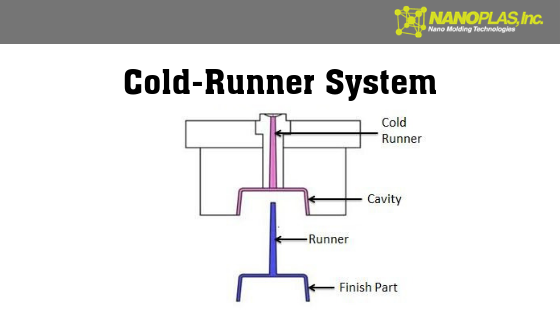
Called a cold-runner mold system because the runners are the same temperature as the molds, there are two types of cold-runner systems: a three-plate system and a two-plate system.
Three-plate systems allow the part to be ejected from the runner without an ejection system, but are a little more complicated than a two-plate system, which does require an ejection system to remove the part and the runner from the mold. Two-plate systems can handle most molds, however a three-plate system is friendlier when it comes to complex designs.
In a cold-runner mold system, the runner has to be larger than the part. Otherwise, you run the risk of underfilling the mold. One big advantage over a hot-runner system is the ability to use more types of polymers without concern for heat sensitivity.
Cold runners are less expensive than hot runners and are easily maintained as well, but they can create waste unless you can recycle or melt down the extra material.
Pros and Cons of Cold Runner System
Pros
- Inexpensive
- Few restrictions on types of polymers
- Easy to maintain
- Easy to change colors
Cons
Hot-Runner Molding Systems
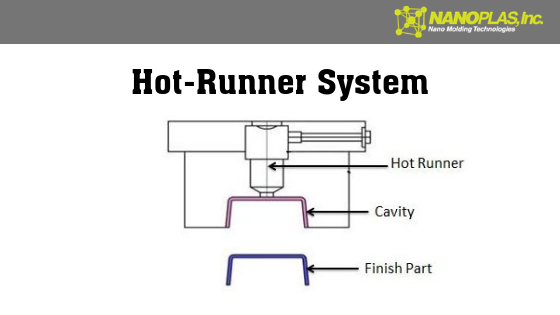
There are two types of hot-runner mold systems, both of which use two plates heated by a manifold system. Externally heated molds allow you to use more heat-sensitive polymers while internally heated molds generate better flow control. Depending on your materials and applications, you may prefer (or need) one type over the other.
Hot runners are more expensive than cold runners (in initial investment and maintenance), but they can handle higher volumes and larger parts and also don’t generate any waste. In some cases, the lack of waste balances with the higher maintenance cost to actually be about the same net cost as a cold-runner system.
Overall, hot-runner molds produce parts with more consistent quality and do so with faster cycle times, but it’s not as easy to change colors nor can hot runners accommodate some heat-sensitive polymers.
Pros and Cons of Hot Runner System
Pros
- Fast cycle time
- Consistent quality
- Very little waste
- Ideal for larger parts and higher volumes
Cons
- Expensive to purchase and maintain
- Not ideal for some heat-sensitive polymers
- Difficult to make color changes
Which Molding Systems are Right for You?
Depending on exactly what you’re doing with your molds—materials, applications, size, volume, etc.—you may have a clear answer as to the best mold system or it may be more complicated. For instance, if you’re only working with heat-sensitive polymers, a cold-runner mold system is probably your best choice. If you’re producing large volumes and need faster cycle times, you’re probably looking for a hot-runner mold system.
However, those aren’t definite answers and shouldn’t be taken as such. You need to consider every facet of what you’re doing to determine the best system for you. Feel free to contact us if you’d like to talk about which type of mold system is your best option.

by Nanomold Coating | Jul 11, 2014 | Plastics, Recent Posts
Updated On: 6/24/2026
When you’re buying molded parts made from different types of plastics, it’s crucial you know about some of parts defects that can lower the quality of the molded plastic parts. If you know the sources of the defects and flaws they can cause, you can work in conjunction with your plastic injection molding company to maintain the highest standard of quality during production.
Key Takeaways: 3 Major Sources of Plastic Parts Defects
- Three primary defect sources include the mold, the processing conditions, and the plastics or additives used during production.
- Mold‑related issues such as flash, drag marks, and warping often trace back to design, alignment, or cooling problems within the tool.
- Processing‑driven defects like bubbles, cold slugs, depressions, stress cracks, and burn marks result from improper heating, cooling, pressure, or ventilation.
- Material‑based flaws including discoloration, streaks, splay, contaminants, and delamination occur when plastics or additives are not prepared, mixed, or handled correctly.
by Nanomold Coating | Jun 25, 2014 | Plastics, Recent Posts
Achieving Perfect Plastic Parts: 4 Steps to Consider
Updated On: 6/24/2026
In the plastic injection molding industry, the quality of plastic parts is paramount. Plastics can be precisely molded, but many companies end up with flawed parts because they get one contractor to construct the mold and another to use the mold to create the parts. As a result, quality is often compromised. Companies can now achieve the perfect plastic parts by taking into consideration the following four steps.
Key Takeaways: Achieving Perfect Plastic Parts: 4 Steps to Consider
- Mold design accuracy is the foundation of part quality, requiring skilled engineering review and optimized geometry before production begins.
- Resin selection expertise ensures each part is built with materials that match performance needs and meet FDA, NSF, and RoHS requirements.
- Pre‑production mold testing validates design, finish, and coloration through single‑cavity trials that confirm readiness for full production.
- Sample part verification allows clients to inspect early runs, request adjustments, and approve final specs before multi‑cavity molding begins.
by Nanomold Coating | Jun 20, 2014 | Plastics, Recent Posts
Very interesting article from Plastics Technology: “Researchers from Harvard University’s Wyss Institute have developed a fully-degradable bioplastic isolated from shrimp shells which they report can be molded into products such as cell phones, food containers and toys…”
The team is developing a new way to process the chitin to be able to fabricate it into larger 3D, complex shapes using traditional casting or injection molding techniques.
Read the rest of the article HERE.